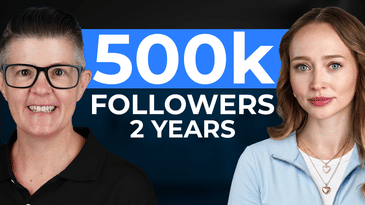

LinkedIn Company Pages are supposedly dead. So how did AtkinsRéalis grow more than 500,000 followers in under two years?
Michelle J Raymond sits down with Holly Kerr (Global Social Media Lead - AtkinsRéalis) to unpack what actually drove the growth, why posting less became part of the strategy, and how employee advocacy evolved into something much bigger than a marketing tactic.
This is a practical conversation about what it really takes to grow a modern B2B LinkedIn Company Page in 2026.
Key moments in this episode -
00:00 Why this LinkedIn growth story matters
01:20 Holly Kerr’s role at AtkinsRéalis
04:45 What actually grew the Company Page
06:40 Why they reduced Company Page posting frequency
08:00 Building a LinkedIn Page worth following
10:30 Testing LinkedIn content creation without fear
14:30 Employee advocacy at scale
19:30 Managing competing business requests
21:00 The problem with event posts on LinkedIn
25:50 Biggest lesson from the journey
28:30 LinkedIn newsletter insights
CONNECT WITH MICHELLE J RAYMOND
- Michelle J Raymond on LinkedIn
- Book a free intro call
- https://socialmediaforb2bgrowthpodcast.com/
- B2B Growth Co newsletter
Connect with Holly Kerr on LinkedIn
Follow the AtkinsRéalis Company Page
#LinkedInCompanyPage #LinkedInB2B #B2BMarketing
G'day everyone, it's Michelle J Raymond and we are back again, listeners,
Speaker:talking about my favorite topic which is all things LinkedIn Company Pages.
Speaker:And listeners, I've got a very special guest who has been part of a project
Speaker:that has grown a LinkedIn Company Page to 500,000 followers since 2023.
Speaker:Holly Kerr, I can't wait to have this conversation with you.
Speaker:Thanks for coming and sharing the secret to your success.
Speaker:Oh, no, thank you so much for having me.
Speaker:I'm, yeah, I'm always, um, excited to talk about LinkedIn and especially when
Speaker:it's, um, about Company Pages, which I think at the moment are getting a bit of
Speaker:bad press and, people are saying they're not very effective and I disagree.
Speaker:Look, and that is exactly why I have you on here, and I heard you on
Speaker:another podcast and I was listening going, "Yes, it can be successful."
Speaker:Like, there isn't all bad news listeners.
Speaker:There are shining examples out there which I'm gonna have more of people like
Speaker:you, Holly, onto the podcast so that we can actually show people what's possible.
Speaker:And just because everyone bags out LinkedIn Company Pages and says
Speaker:they're a waste of time, yeah, that's great if that's still your corporate
Speaker:job and you're responsible for it.
Speaker:But Holly, like for people who haven't come across you, can you just tell us,
Speaker:like what is your role at Atkins Realis and what is it that actually you do
Speaker:and what are your responsibilities?
Speaker:Because something tells me that you're not just sitting there just doing LinkedIn.
Speaker:No.
Speaker:And, and sure, I, I can kind of give a bit of insight.
Speaker:So I've worked for Atkins Realis for coming on nine years in July.
Speaker:I've been in a social media focused role for two years and
Speaker:that was kind of when I stepped into focusing only on social media.
Speaker:So I have a marketing background before that.
Speaker:And for anyone who doesn't know, Atkins Realis is an engineering
Speaker:and nuclear services Company, so it's in the B2B space.
Speaker:We don't have a product that we're selling.
Speaker:We have our people, their expertise, and the solutions that we're trying to, um,
Speaker:bring to clients and kind of communities in, in these projects that we deliver.
Speaker:So what does that mean for social media?
Speaker:My responsibilities kind of cover all of the channels that we're on, and
Speaker:that is the ones you would probably expect we're, we're kind of there.
Speaker:So, LinkedIn is our primary.
Speaker:We find that most of our audience are there, and it's,
Speaker:uh, it's a key focus for us.
Speaker:But outside the kind of day-to-day posting on the Company Page, that strategy has
Speaker:evolved, especially over the last kind of five years as LinkedIn has grown
Speaker:and kind of morphed into what it is now So we look at the paid approach.
Speaker:We also look at leader-led social media, so what are the execs and
Speaker:kind of leaders from the business out there posting, if anything.
Speaker:And then our people, we have a 40,000 strong employee workforce, and we've,
Speaker:I think, all heard now the impact employee advo- advocacy can have.
Speaker:Um, so our LinkedIn strategy is kind of, has kind of got those four
Speaker:prongs, and we try and move away from sometimes the business comes to us and
Speaker:says, "Can we get this on LinkedIn?"
Speaker:And I think we were in a place before where the knee-jerk was like, "Yes,
Speaker:we'll do a Company Page post. Let's get that sorted." We try and take a
Speaker:step back and we try and offer insights into what might be the best lever
Speaker:to pull, and sometimes it's one of them, sometimes it's all of them, and
Speaker:sometimes it's gonna be a mixture.
Speaker:But so outside of kind of that day-to-day, we look after the, the governance,
Speaker:the strategy and then the training of uh, all of our people and kind of
Speaker:at various different levels as well.
Speaker:So you're sitting round twiddling your thumbs is what I hear.
Speaker:Yes.
Speaker:So much free time on your hands.
Speaker:Like, that is the thing that I think, I just got back from Social Media Marketing
Speaker:World, got to speak to lots of great marketers there, and I, I shared it on
Speaker:last week's episode, but the thing that blew me away is just how many things
Speaker:marketing teams, social media teams are juggling in day-to-day life in corporate.
Speaker:It, it is just mind-blowing.
Speaker:I'm lucky.
Speaker:I just get to be an expert on LinkedIn, and specifically, you
Speaker:know, Pages and employee advocacy.
Speaker:Mm. I don't even touch paid.
Speaker:So, you know, for me, it's quite a challenge to keep up with all the
Speaker:changes, so I can only imagine even with all of your experience, you know,
Speaker:trying to convey the latest, greatest tips of what's going on, align it still
Speaker:with your strategy, achieve the business goals, and I'm imagining that there's
Speaker:a lot of people that have a lot of opinions on what you guys are doing- Yeah
Speaker:and what you should be doing.
Speaker:And we will talk about that later, because I think that's probably the
Speaker:biggest challenge that internal teams have is trying to fend off- Mm ... all
Speaker:of the requests that come through.
Speaker:But I did tease the audience, and it is actually true, that you guys
Speaker:crossed over 500,000 followers, most of which have grown since 2023.
Speaker:I know that that number's even higher now since we booked to have this conversation.
Speaker:But why do you think in a world where organic Company Page reach
Speaker:is next to nothing, why do you think the Page grew so much?
Speaker:Because there are people out there that have access to all of those
Speaker:things that you have, employee advocacy or paid strategies or,
Speaker:all, all the things that you said.
Speaker:What do you think has been the secret to your success?
Speaker:Sure.
Speaker:I had to think about this and I wanted to kind of make sure my answer wasn't,
Speaker:you know- It wasn't kind of wishy-washy.
Speaker:So I've, I've really tried to, um, sit and, and, and stew on it.
Speaker:So I think the first thing I have to acknowledge is it's an established
Speaker:brand within its category, and that is a big boost, right?
Speaker:That's a big help.
Speaker:We rebranded in 2023 in September, so we had to start a new Page, and there was
Speaker:obviously legacy understanding of this brand and where it was moving, and exci-
Speaker:excitement after the initial rebrand.
Speaker:So I think that got us started.
Speaker:Outside of that, I think acknowledging that this was a huge team effort.
Speaker:This was not going to happen with the three people that work
Speaker:in my team, so including me.
Speaker:So there's three of us who work on the 13 channels that we run globally.
Speaker:Um, we were never going to have, um, the ability to reach kind of ambitious
Speaker:goals just working on our own.
Speaker:And I think we had to kind of take a step back and look at what was
Speaker:our goal, and it was initially growth, and it was brand awareness.
Speaker:So we broadened the net in terms of who can help us, what ideas can
Speaker:we throw into the mix, and that took us into a space where we were
Speaker:testing, and we were failing fast.
Speaker:I know people say that a lot and it- and sometimes it's really hard to get into a
Speaker:space where you feel you can do that on a stage that is so visible, like, uh, social
Speaker:media accounts because people can see it.
Speaker:But we tried different things, whether that was formats, whether it was
Speaker:recurring items, whether we, you know, we ran for a while a meet our experts,
Speaker:where we would share employee profiles and see, you know, how do people relate
Speaker:to this and how are they responding.
Speaker:We tested different types of video and all the while kind of contesting
Speaker:with the algorithmic changes that kind of, appear, um, and kind
Speaker:of throw chaos into your plans.
Speaker:I think as well, we, we spoke about this before, but we
Speaker:reduced down the number of posts.
Speaker:So when I first came into this role, we were posting upwards of
Speaker:six times a day in a 24-hour period.
Speaker:That's just a lot.
Speaker:And if you're acknowledging Company Page posts are already competing with
Speaker:the rest of the feed and boosted posts and ads, why compete with yourself was
Speaker:kind of what we were, we were trying to put forward to our stakeholders.
Speaker:So we now post twice within a 24-hour period, and I think bringing a bit
Speaker:of balance and control has helped.
Speaker:It's helped us redirect some of the content to come out via individual
Speaker:accounts or leader accounts as well.
Speaker:But we really said, "What do we want people to follow us for?
Speaker:Like, why would they follow this Page?" And we really defined that.
Speaker:So we break news, we share stories of what the brand is doing, but we
Speaker:try and really put the lens over of like how ... Why does this matter
Speaker:to anyone kind of just scrolling?
Speaker:How does this impact the communities that we're serving?
Speaker:Put that at the core of the post and the story so we're not talking about all the
Speaker:time, "Oh, Atkins Realis- is doing this."
Speaker:A lot of the time we're trying to either educate or inform or kind of energise
Speaker:people behind the industry that we're working in or the, the impact that, uh,
Speaker:projects can have that often, I, I find out something new every week that we do,
Speaker:and, and other people won't know either.
Speaker:So we really tried to consider why someone would want to follow us, and
Speaker:then try and keep that in mind among all of the other things we have to consider
Speaker:in, in a plan for our Company Page.
Speaker:I know, listeners, that Holly has just shared so many cool things,
Speaker:and I could talk about this all day.
Speaker:And I appreciate your honesty in thinking about this answer because,
Speaker:yes, there have been some advantages that you have from the size of the
Speaker:brand that you have, and the resources, and the legacy of that brand.
Speaker:But I think that the actual winning piece of what you've just shared
Speaker:there is creating something worth following for your industry.
Speaker:And, uh, if I could have that on T-shirts and sell it to everybody
Speaker:and say, "Do what Holly says," like create a Page worth following, I'm
Speaker:gonna say that algorithm aside and all the other crazy that comes into the
Speaker:platform, I actually think that is the most simple way to define the success
Speaker:that would come with a Company Page.
Speaker:And I 100% agree with you is why are we actually putting
Speaker:all of this effort into Pages?
Speaker:Is it just to talk about ourselves?
Speaker:And I did a podcast episode recently where I was talking about a lot of
Speaker:Pages turn into the internal newsletter or bulletin board- Mm-hmm ... where we
Speaker:talk about what's coming up, what we're gonna do, here's what we've been doing.
Speaker:You know, we, we, we, we, we, and nothing about the industry.
Speaker:So I have a very happy heart listening to what you're sharing here, and
Speaker:no doubt that that's been, you know, a part of the big success.
Speaker:But I, I think it's also interesting that, as you said, there's lots of
Speaker:pieces to this puzzle, and some of it is acknowledging that when you try stuff,
Speaker:you're not necessarily gonna break a whole brand because a post fails.
Speaker:Can we just talk about that one more time?
Speaker:Because I think being scared that you're gonna break a brand stops people
Speaker:from trying things to see what works.
Speaker:Is that something you had to go through in the beginning- Yes ... and come
Speaker:to terms with what that actually was?
Speaker:Yes, and I think we could all relate.
Speaker:We hear it all the time, you know.
Speaker:The thing I put the most love and energy into and think, "This is gonna be the
Speaker:post. We'll talk about this for years to come, and this will be the defining moment
Speaker:of my social media career," is the post that gets, vanity metrics are terrible,
Speaker:the impressions are not what I wanted, and it just passes by without anyone caring.
Speaker:And the thing that you whip up quickly and get out there in a rush with
Speaker:none of your governance and none of your strategy, it does really well.
Speaker:And I think there's a lesson in that which is sometimes we can overcomplicate
Speaker:what we're doing, and at the core, if we come back to that piece that you
Speaker:just pulled out which is, i- is this something that I care about if I'm
Speaker:scrolling past tens of posts a day?
Speaker:And if the answer's yes, then you're, you're onto a good thing.
Speaker:I think we have had lots of failures in terms of things
Speaker:we've tried and it hasn't worked.
Speaker:One of the biggest obstacles we had when we first rebranded was this new brand we
Speaker:have is way more vibrant than the... We were kind of blue and grey before, and
Speaker:we're now, we've got four key colours, and they're bold, and we have this,
Speaker:um, brilliance as kind of the effect of, uh, the way the brand is applied.
Speaker:And it's a learning curve to learn how to apply it in a way that isn't garish and
Speaker:isn't standing out and looking clunky, and I still don't get that right all the time.
Speaker:But we... You have to try things, and you have to kind of see
Speaker:how it looks and it goes over.
Speaker:I think, though, that is part of the joy I find in this role.
Speaker:It, it's the thing that brings me the most annoyance and the most happiness.
Speaker:It, it's that kind of, um, dual- duality of it where I'm happy when something
Speaker:works really well and, and I also then feel, really gutted when it doesn't.
Speaker:But- That's what keeps it interesting.
Speaker:That's what keeps me coming back.
Speaker:Oh, welcome to my world.
Speaker:I spent the last three months of last year rocking in a corner going, "Do I
Speaker:even wanna do this LinkedIn stuff anymore?
Speaker:Where have all my impressions gone?" On the other hand, posting everyone,
Speaker:it's all about relative" "... and it's not about impressions, it's not about
Speaker:reach." And so on one hand, I knew what it was, but my inside, the honest truth,
Speaker:listeners, is that I was shattered and I did not know how to respond to
Speaker:something that had worked consistently in my personal content for 10 years.
Speaker:I could ... I knew if I did this, this would be the outcome every
Speaker:single time, day after day for that.
Speaker:And then as times goes on, and then LinkedIn wake up one day and they
Speaker:say, "Okay, it's about relevancy and not reach now. Uh, we're changing
Speaker:the whole game" and it felt awful.
Speaker:You know, a- and I'm not going to sugarcoat that.
Speaker:I actually think Pages have been shielded from this impact on such a level because
Speaker:realistically, most Pages were never in the feed for the last six years that
Speaker:I've been focused on Company Pages.
Speaker:We were never showing in the home feed, so w- I don't think any Page
Speaker:admins really noticed the bump from this side of things, and it'll be
Speaker:interesting to see where it goes.
Speaker:I, I literally spent an hour on a call today with an, a, a friend of mine who's
Speaker:part of the engineering team for the Pages team, and there's some fundamental shifts
Speaker:that I'm excited about where they're going and I'd love to tell you, but I
Speaker:can't, uh, otherwise I'll get cut off.
Speaker:But what I love is that they're open to where the next evolution of Pages
Speaker:is, and that's something that excites me 'cause it means they're putting
Speaker:money into it, and that means that they still value Pages like we all should.
Speaker:Now, when you did your celebration post for this big achievement, I was
Speaker:so glad that you did stop for a minute and actually acknowledge the work that
Speaker:had gone into this massive achievement 'cause I just wanna say, I know how hard
Speaker:it is to grow a Page regardless of all of those things that you had behind you.
Speaker:You have to show up and do the work and be in service of your audience.
Speaker:But there was one line that stood out from that post and it caught
Speaker:my attention, which is, "Employee advocacy isn't a tactic for us, it's
Speaker:a behaviour." What does that actually mean and look like inside your business?
Speaker:Sure.
Speaker:I think we've been working with our talent attraction team, and I wanna shout
Speaker:them out because they do an incredible amount of this work with us and we, we
Speaker:wouldn't be able to do this without them.
Speaker:And they were the pioneers of this.
Speaker:Before I came into this role, you know, they were kind of working
Speaker:almost underground delivering this and they didn't maybe have the
Speaker:inroads that I did in some of the places I now do, so we kind of work
Speaker:together to do this as best we can.
Speaker:But what it really means for us is we've- We've all heard, I think,
Speaker:h- the impact that employees talking about their experience at
Speaker:a brand, good, bad, ugly can have.
Speaker:And obviously I want people to talk about the reality, but I'd like that to be
Speaker:you know, authentic, as much as we can say, like, authentic in social world.
Speaker:And what we have recognised is it's a cultural behavioural
Speaker:change that we're asking.
Speaker:We want people to feel proud, and if they do, we'd like them
Speaker:to maybe, you know, externalise that and share their experience.
Speaker:But that doesn't just happen.
Speaker:There's a few things that you need to do to enable it.
Speaker:So for us, it looks at role modeling that behaviour.
Speaker:So you need role models from all walks of life and every kind of role
Speaker:in the business, whether that is the leaders, but, most people now
Speaker:recognise that leaders have a team around them helping them do that.
Speaker:So they're not necessarily the people I wanna put up on a, a pedestal.
Speaker:Within our business we've always had people that have energetically done
Speaker:this themselves, and I champion those people, and we really try and make them
Speaker:as visible as we can and celebrate them.
Speaker:I also started role modeling the behaviour myself so that
Speaker:I had a bit of a case study.
Speaker:And my goal is that by the end of this year, you know,
Speaker:I'm no longer the case study.
Speaker:I don't want to be the case study.
Speaker:I want it to be people from the business.
Speaker:So that role modeling piece is really important though, because you know, if
Speaker:you see someone in your team doing it and getting recognition, the likelihood is
Speaker:other people catch on and they recognise it could be good for them to do as well.
Speaker:But beyond that, you need to make it easy for people to do.
Speaker:So what tools and training are you able to provide?
Speaker:And we've worked really hard over the last year to create on our intranet
Speaker:a social media hub that's got all of the governance and code of conduct and
Speaker:all of the things I need to have on there, but goes well beyond that now
Speaker:into, you know, if you're just getting started, here's the deck for you.
Speaker:If you're, you think you know kind of what to do, but you wanna take it to the
Speaker:next level, here's how you can upskill.
Speaker:Okay, you're really good and you're consistent, what else are you missing?
Speaker:Here's all of the latest tips and tricks.
Speaker:And that, it, it's hard work to keep that up to date and to make sure it's
Speaker:accessible and kind of not overwhelming.
Speaker:So we've got lots of kind of ways that people can access, you know,
Speaker:the advice and, and the training.
Speaker:Myself and my team, in a targeted way, because we couldn't possibly train
Speaker:40,000 people if we wanted to, we'll get out there and we'll run sessions in
Speaker:person, we'll do webinars, we'll make sure that we're available to kind of
Speaker:ease people into this world But I think the fundamental piece is I want our
Speaker:people to know that we trust them to do this, and we trust them to do it well.
Speaker:And that doesn't mean that everyone is going to become a brand parrot.
Speaker:And actually, that's my hardest thing with all of this, is that people want
Speaker:branded assets and they want you know, the line to take, and they want to
Speaker:just, you know, take what we give them.
Speaker:And getting them unwedded from that is, is a challenge, and that's what
Speaker:I'm determined to kind of encourage our people to do, is to feel they
Speaker:can post as themselves with their opinions, and that's what we want.
Speaker:That's what's real, that's what's gonna cut through.
Speaker:So it, it is a big undertaking, and it's, and it shouldn't be underestimated,
Speaker:the, the, the effort that gets, you know, into, behind these programs.
Speaker:But the payoff is huge, not only for the individuals and building their own
Speaker:personal brands, but the ripple effect for the Company and the reputation
Speaker:and, um, you know, amplifying messages.
Speaker:It's enormous.
Speaker:I am laughing because, Holly, isn't it just as simple as all of the gurus
Speaker:and the bros and the hackers out there on LinkedIn that say, "Just get your
Speaker:employees active. You'll get, you know, 10 times more reach," blah, blah, blah.
Speaker:Didn't you just flick a switch?
Speaker:Wasn't it that simple, that everybody was lining up saying, "Holly, let me
Speaker:do whatever you, it is that you need.
Speaker:I can't wait." You know, again, thank you for your honesty that these things
Speaker:aren't easy, but they are worth it if we invest time and resources into it.
Speaker:And I think, like you said, sometimes starting off small and then working our
Speaker:way up bit by bit over time, so this has taken you a few years to implement.
Speaker:And I think- It's been ... the lesson is to be realistic, you know, with
Speaker:these implementation timeframes.
Speaker:It won't happen overnight, but it will happen, as, as
Speaker:the ads say here in Australia.
Speaker:Yeah.
Speaker:There was something that we alluded to earlier, and you and I were talking about
Speaker:the joys of working in big corporations.
Speaker:They come with their own unique sets of challenges, and one of
Speaker:yours was obviously everybody has something that they wanna post.
Speaker:You've got one main key Page, you know, across you know, 40,000
Speaker:employees, all the different business units, all the cool stuff that your
Speaker:business is up to on a daily basis.
Speaker:How do you decide what content deserves a place on the Page versus
Speaker:what probably shouldn't be posted?
Speaker:I mean, going from six back to two a day, you had to probably make some pretty
Speaker:tough and strong decisions, I'm thinking.
Speaker:How did the business receive that, and where are you at now?
Speaker:Yeah.
Speaker:So I would say this is the hardest bit of the job, genuinely.
Speaker:And that doesn't mean it's- Not worthwhile and interesting.
Speaker:It just means it's, it's really challenging.
Speaker:And when I did kind of come in and say, "We shouldn't be posting six times in
Speaker:a 24-hour period," we're gonna ... At first we capped it to three and that
Speaker:was, you know, kind of groundbreaking.
Speaker:And it made me unpopular for a while, but I was comfortable to be unpopular
Speaker:because I believed in where we were going.
Speaker:And my job was to guide people through that and keep them on track with the plan.
Speaker:I think the best way I could probably talk about this is with a real-life example
Speaker:and something we're working through now.
Speaker:So we attend a lot of events as a Company.
Speaker:So if I posted every single event that Atkins Realis may show up at, whether
Speaker:it's with a delegate or whether a full stand sponsorship, I would be posting
Speaker:numerous times a day, and nobody would ever want to follow the Page because
Speaker:it's just an event promotion Page.
Speaker:And so we, when I first came into this role and when we were first kind of
Speaker:grappling with this, we said, "We're not posting these events." And we went
Speaker:we're not gonna do it." So we kind of wound it down, and we said, No more.
Speaker:We'll have our individuals post.
Speaker:They'll say, 'We're going to this event.' They'll talk about it.
Speaker:And if we want to talk about an event we're going to, let's talk about something
Speaker:we're gonna speak about at the event.
Speaker:And we'll use that, and at the end of the post we can say, you
Speaker:know, 'We're going to this event.
Speaker:See you there.
Speaker:And that was working for a while, but actually in this example, we then heard
Speaker:feedback from different parts of the Company, places where brand awareness
Speaker:maybe wasn't as strong or where, four or five of these events they attend in
Speaker:a year are key moments in time for them.
Speaker:And what that's led us to now is almost a hybrid of where we'd been, where we have a
Speaker:rough framework that has a tiered system.
Speaker:And I work with our directors of marketing in the kind of two key parts of our
Speaker:business to understand in which region which events are really mega for us and
Speaker:where we have put a sizable amount of investment, whether it's monetary or
Speaker:whether it's people's time and, what the goals are and what we're hoping to
Speaker:achieve connected to the business's plans.
Speaker:And that helps us know whether we're gonna announce our attendance on the
Speaker:Company Page, whether we're gonna do a kind of event activation and, and
Speaker:involve social in that plan, or whether it's kind of a bit less prominent but
Speaker:will still support individual delegates and kind of get them posting ahead
Speaker:of that event, or whether it's not something we need to worry about at all.
Speaker:And what I would say with these frameworks is- Be brave, put one
Speaker:together, be prepared for the first iteration of that, that you put forward.
Speaker:It's gonna need lots of suggestions, and have the humility
Speaker:to have people feed into it.
Speaker:I find this really hard.
Speaker:I like to work on something and finish it that day and move on to the next thing.
Speaker:So I find- Done ... this really challenging.
Speaker:Exactly, I wanna tick it off.
Speaker:But actually, this event framework, we'll probably finalise it in the next two
Speaker:months, and we've been, um, working on this in some type of way for probably over
Speaker:a year, and you have to be okay with that.
Speaker:Things evolve and change.
Speaker:And also, in two months' time I'll go final, and then we'll have to consider
Speaker:something else, and we'll make it, you know, we'll change it again.
Speaker:So put these frameworks in place, but know that it has to be responsive in real time.
Speaker:So it's not realistic to post everything, it's not realistic to
Speaker:have someone chuck something at you and get it up that same day, until it
Speaker:is, until it's newsworthy, you know?
Speaker:And, and it's, it's a really difficult... I kind of... We don't have a map for it.
Speaker:But try to put a framework in place, and back your strategy, and really
Speaker:explain to people why we wouldn't wanna be sharing absolutely everything, and
Speaker:redirect them to what we can do instead.
Speaker:I think that's a vital lesson I've had from this, is, so it's not gonna
Speaker:go here, but it could go there, and explain, how that could work as well.
Speaker:I love it.
Speaker:I literally stood on stage at Social Media Marketing World and pretty much
Speaker:begged the audience to stop filling up our feeds with we're at this event posts.
Speaker:Yeah.
Speaker:No one cares.
Speaker:Like, honestly, no one cares.
Speaker:Give them a reason to come and see your team there.
Speaker:Let them see the faces of the people that are there.
Speaker:So I, uh, listeners that are, catching this on the podcast, I'm sitting here
Speaker:high-fiving Holly, going, "This is, like, the best. I want everybody to
Speaker:follow that." But I'm also a realist.
Speaker:I know that you can't just throw things out because that's what works on social
Speaker:or that's what works on LinkedIn.
Speaker:You are part of a greater team.
Speaker:You have colleagues that you need to work with ongoing, and not just, you know,
Speaker:bad luck, it's my way or the highway.
Speaker:So I, I love hearing about the practical side of this, that
Speaker:it isn't just black and white.
Speaker:It isn't just a one-way, one-size-fits-everyone, because
Speaker:that is not the reality, listeners.
Speaker:If you are having trouble trying to negotiate and align your social media
Speaker:strategy with business goals, and it feels like people are always trying to
Speaker:send you off course, that is a day in the life of a Page admin or a social
Speaker:media manager or a marketing manager And the reason, as I said, that I, I love
Speaker:having you to have this conversation, Holly, is the fact that's the reality,
Speaker:not this glorified vision of people on YouTube that do videos that say, "Just
Speaker:post this and it'll all be magic, and we're all gonna make billions of dollars."
Speaker:Like, it doesn't work like that in a business setting with, you
Speaker:know, uh, Company Pages especially.
Speaker:But looking back on the journey, and you've shared so much, to get to
Speaker:500,000-plus followers now, what's the biggest lesson that you've learned,
Speaker:either personally or professionally, about growing the Company Page today that
Speaker:you wish you'd known a few years ago?
Speaker:It's a really good question.
Speaker:And I think for me, I come from a background where I did a drama
Speaker:degree at university, and the way that manifests in my day-to-day
Speaker:is I have a flair for dramatics.
Speaker:But outside of that, I love connecting with people, and I'm, uh, the
Speaker:h- the, the core of that kind of dramaturgy is that communication.
Speaker:So what are you conveying to an audience, and how do you wanna make them feel?
Speaker:And I think if we can bring more of that into our why and when we're
Speaker:devising a strategy or whether we're focusing on an individual post, of
Speaker:course we have back-to-back calls and there's lots to distract us
Speaker:from our why or the Page's why.
Speaker:But I think if I could've, if I could go back to myself then, I'd
Speaker:say know what we want people to feel when they're interacting with
Speaker:our content, and let that guide us.
Speaker:And whether that's our people, we want them to feel proud and
Speaker:we want them to feel a sense of ownership behind the brand as well.
Speaker:And if it's people that we're reaching out to, we wanna inspire the next
Speaker:generation of people to join our industry.
Speaker:And if it's our clients and our communities, we want them to feel,
Speaker:you know, excited by what's happening in their community and, and by
Speaker:the problems that we're solving.
Speaker:So really lead with feeling, and that kind of sets, you know, it's a really
Speaker:good barometer for where you should be going and how you should be showing up.
Speaker:I love it.
Speaker:What, actually care about your audience?
Speaker:Is this the secret, to actually give a damn about the people on the other side?
Speaker:Who would've thought, Holly?
Speaker:Who would've thought that's the secret, is that it's not
Speaker:all about you, it's about them?
Speaker:And I'm gonna throw one very quick last question in there.
Speaker:If I was the LinkedIn gods of Company Pages, which I'm just the Company Page
Speaker:queen, so I'm not quite there yet.
Speaker:But if I was the gods that could grant you one Company Page wish for
Speaker:one feature, what would you choose?
Speaker:Ooh, what a good question.
Speaker:You just never know who's listening to this podcast No And I know that we do have
Speaker:a LinkedIn team that do listen in- Yeah
Speaker:especially on the Pages episodes.
Speaker:So I didn't wanna miss this one, 'cause it's top of mind
Speaker:after my conversation today.
Speaker:But what would you pick?
Speaker:And don't ask for organic impressions, 'cause I'm not that good.
Speaker:No.
Speaker:It's never gonna happen.
Speaker:Do you know what?
Speaker:So we've recently, we've got a newsletter that we're running, and for us-
Speaker:Love it
Speaker:that newsletter's doing, it's doing really well.
Speaker:But I wish I could see more detailed analytics of my newsletter.
Speaker:Um, I have some, and it's great, but to really get all of the data that I want,
Speaker:I have to be really, um, disciplined about every week going in and, like,
Speaker:pulling data and then adding it to a different spreadsheet and analysing it.
Speaker:And I wish that they would level up that, because we're about to
Speaker:launch a second newsletter because we've seen it be so successful.
Speaker:But the thing that's holding me back from being able to you know,
Speaker:grow it even more is I can't always tell the story and tell the success
Speaker:because the data's not always there.
Speaker:Great minds think alike.
Speaker:It was on my shopping list today because I love newsletters.
Speaker:I think every Company Page of a reasonable size should have one,
Speaker:and that, for me, was it as well.
Speaker:It, you know, it's all about being able to almost justify what
Speaker:you're trying to do out there.
Speaker:For me, previously it was about commenting as your Page and
Speaker:being able to analyze- Mm-hmm
Speaker:the impressions, and that stuff's coming, as far as I know.
Speaker:Uh, so there's some cool things coming, but yeah, I, I'm right there.
Speaker:So thank you for answering that one off the cuff.
Speaker:Like I said, I know that there are LinkedIn employees that listen
Speaker:to this podcast, and my next guest is from the B2B Institute.
Speaker:Vita Molis is on next week, so I can't wait to talk to her and see
Speaker:what's coming out of the institute.
Speaker:But Holly, thank you so much for your honesty.
Speaker:Thank you for sharing the realities of what it's like to grow a
Speaker:Page to 500,000 followers plus.
Speaker:I am absolutely cheering you on in all of the success, because I know that
Speaker:the amount of effort that's gone in by you, your team, your colleagues,
Speaker:to make this happen, uh, I wish you every success in the future, and
Speaker:thanks for coming on and sharing.
Speaker:Oh, amazing.
Speaker:No, thank you so much for having me.
Speaker:It's been a real pleasure.
Speaker:It has, and any time you wanna talk Company Pages, you know where to find me.
Speaker:But until next week, listeners, cheers.